
Installation Guide
Venting Requirements
FOR CORRECT VENTING
- Allow 28-36" between the top of the cooking surface and the bottom of hood. Allow 36-40” for venting over a BBQ grill.
- The best option is to vent vertically through the roof if possible; vent through a side wall if you cannot vent directly above your hood.
- Use galvanized steel or metal HVAC ducting only.
- For best performance use as few elbows as possible, with no more than three 90° elbows. Include at least 18" straight from the transition piece before using an elbow in the duct and make sure there is at least 24" of straight vent between any elbows.
- Use duct tape or HVAC tape to seal all joints in the vent system.
- Use caulking to seal exterior openings around the cap
- Always keep the duct clean to ensure proper airflow
NEVER
- Terminate the vent system into an attic or other enclosed area.
- Mount the range hood outside of the 28"-36" height above the cooking surface. Hoods mounted too low may be susceptible to heat or fire damage. Hoods mounted too high will perform poorly and become inefficient.
- Use 4" (10.2 cm) laundry-type wall caps.
- Use plastic venting or plastic ducting.
- Use more than 40' of ductwork.
- Install a range hood lower than 36" over a BBQ.
- Reduce the diameter of your duct work from the hood outlet size.

Venting Options

VERTICAL ROOF VENTING
- Ducting goes vertically above the range hood through the house’s roof. This is the most efficient way to vent and the preferred venting option for all Wall mounted or Island hoods.
- A roof cap is needed to protect the ducting from the exterior. Seal the roof cap with caulking.

HORIZONTAL WALL VENTING
- This is an alternative option to vertical venting. Ducting goes horizontally from the range hood through the house’s side wall. Depending on the model of hood, venting can go straight through an exterior wall from the back of the hood if the hood has an option to rotate the blower panel (Option 1). This option is only available on specific models.
- The second option is to vent off the top of the blowers and elbow off of the top of the hood, through the wall (Option 2). For correct venting please allow at least 18" of straight vertical travel off the top of the transition piece before attaching the elbow. (As seen)
- A side wall cap is needed to protect the ducting from the exterior. Seal the side wall cap with caulking.

HORIZONTAL WALL VENTING OPTION 2
- This is a second, alternative option to vertical venting. Ducting goes through the kitchen ceiling from the top of the hood and then through a nearby exterior wall.
- For wall hoods it is recommended venting out of the wall that the hood is mounted on, allowing the shortest exit. For island hoods the nearest exterior wall in any direction is recommended for venting.
A side wall cap is needed to protect the ducting from the exterior. Seal the side wall cap with caulking.
Wall Hood
Wall Hood Preparation
WHAT YOU WILL NEED
 Power Drill
 Screwdrivers
 Drill Bits
 Tape Measure
 Masking Tape
 Pencil/Marker
- Metal or Aluminum HVAC Tape
 Level
Level Wall Anchors*
 Scissors/Box Cutter
INSPECT RANGE HOOD
- Check the contents of your box. They should include:
- Range Hood
- Wall or Ceiling Mounting Bracket
- Hardware
- Chimney (Applies to Specific Models)
- Support Brackets (Applies to Specific Models)
- Transition Duct (Applies to Specific Models)
- Plug in and test controls, lights, and fan.
- Inspect for any damage caused during shipping.
- Report any damage to Proline Customer Service within 14 days of receipt of hood by calling 877.901.5530 or emailing support@prolinerangehoods.com
- Do not install if the hood is damaged or you are unsatisfied with it.
PREPARE DUCTWORK
Plan where your ductwork will be located. Install the proper sized ductwork and exterior roof or wall cap, depending on where you will be venting your hood to the exterior. Ductwork should already be punched through the ceiling (or wall if the ceiling is not an option) and ready to hook up to the range hood before beginning installation. See venting requirements above.
*Range hood needs to be installed to secure studs or supports. Wall anchors can be used for additional support and will vary depending on wall material and the weight of the range hood being installed.
Wall Hood Installation
First draw these markings on the installation area wall
- Center line of installation area.
- Location of wall studs nearest to the center line. (One on each side)
- Horizontally level line 28-36" above the cook top surface. (Location of the bottom of the range hood.)
STEP 1
Find location for mounting the range hood
- Trace the outline of your hood on a panel of its cardboard box.
- Find the mounting holes and center point of the hood (directly between the mounting holes) and mark them on the cardboard panel.
- Carefully cut out the cardboard outline.
- Tape the cardboard cutout panel to the wall lining it up with the horizontal line (bottom of hood location) and matching the center point with the center line of the installation area.
- Poke holes through the mounting points on the cardboard marking the locations on the wall and remove the cardboard.
- If using wall anchors, pre-drill the mounting holes where your marks are with the correct size bit and insert the wall anchors.*
- Screw in mounting screws to the marked studs and or wall anchors, leaving roughly a 1/4" gap. This gap will be used to hang the hood in STEP 3.
*Range hood needs to be installed in secure studs or supports. Wall anchors can be used for additional support and will vary depending on wall material and the weight of the range hood being installed.
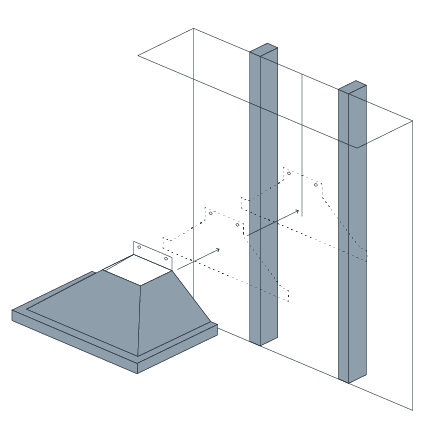

STEP 2
Install Ceiling Chimney Bracket
- Place the chimney bracket against the ceiling, matching the center point of the bracket with the center line of the installation area.
- Mark the locations of the bracket holes on the wall and drill the holes where the locations are marked (The size of drill bit will depend on the size of hole that the wall anchor calls for).
- Insert wall anchors in the drilled holes and screw the bracket into place. The chimney will mount to the bracket.
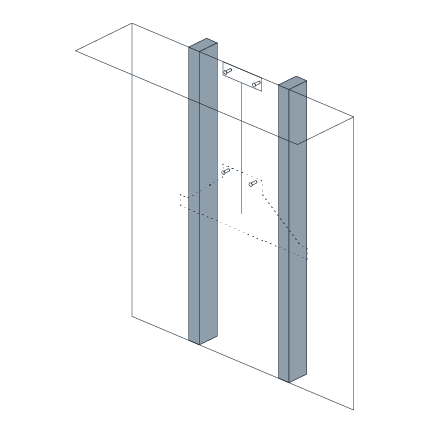
STEP 3
Hang Range hood and Connect:
- Hang the hood on the mounting screws in place from STEP 1. Tighten the mounting screws to secure the hood. The bottom of the hood should match up with the the horizontal line marked on the wall.
- Drill holes in the back of the hood lining up with the wall studs that have been previously marked (Use an appropriate drill bit for the mounting screws included in the hardware bag).
- Secure the hood to the wall studs using the screws included in the hardware bag.
- Attach the previously installed ductwork to the hood’s blowers, taping it in place using duct tape or HVAC tape.
- Power the hood by connecting the three pronged plug to a nearby electrical outlet or by hardwiring the hood to a power source (Always consult an electrician before directly wiring a hood to a power source).
*Always consult an electrician before directly wiring a hood to a power source.

STEP 4
Install Chimney
- Remove protective film coating.
- Place the two pieces of chimney on top of the range hood, making sure the vent in the upper section is towards the top and the upper section slides inside the lower section in a telescoping manner.
- Attach the top section of the chimney to the mounting bracket, allowing the bottom section of the chimney to rest securely on the top of the hood.
- Screw the base of the chimney to the top of the hood (if there are mounting holes available)
*Not all styles of wall mount range hoods have chimneys (Under cabinet & Insert styles are typically without a chimney). Chimneys usually come in two telescoping pieces unless they are custom cut.

This concludes the installation of a wall hood.
If you have any questions about the installation process please call Proline Customer Service at 877.901.5530 or visit prolinerangehoods.com.
Island Hood
Island Hood Preparation
WHAT YOU WILL NEED
- Power Drill
- Screwdrivers
- Drill Bits
- Tape Measure
- Masking Tape
- Pencil/Marker
- Metal or Aluminum HVAC Tape
 Plumb Bob/Laser Level
- Scissors/Box Cutter
 2x4s or Appropriate Framing Material*
INSPECT RANGE HOOD
- Check the contents of your box. They should include:
- Range Hood
- Ceiling Mounting Bracket
- Hardware Bag
- Chimney
- Support Brackets
- Transition Duct (Applies to Specific Models)
- Plug in and test controls, lights, and fan.
- Inspect for any damage caused during shipping.
- Report any damage to Proline Customer Service within 14 days of receipt of hood by calling 877.901.5530 or emailing support@prolinerangehoods.com
- Do not install if the hood is damaged or you are unsatisfied with it.
PREPARE DUCTWORK
Plan where your ductwork will be located. Install the proper sized ductwork and exterior roof or wall cap, depending on where you will be venting your hood to the exterior. Ductwork should already be punched through the ceiling (or wall if the ceiling is not an option) and ready to hook up to the range hood before beginning installation. See venting requirements above.
* 2x4s and other additional framing material may be required if installing extra supports, or if ceiling joists are not available in installation location
Island Hood Installation
First draw these markings on the installation area ceukubg
- Center line of installation area.
- Location of ceiling joists nearest to the installation area. (One on each side)
STEP 1
Mark ceiling
- Find the joists in your ceiling.
- Find and mark the center point directly above your cooktop using a plumb bob or laser level to line them up accurately.
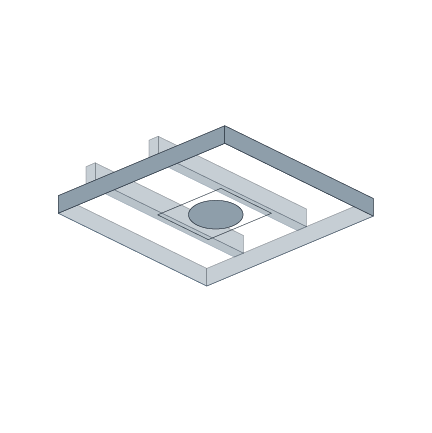
- Place the ceiling bracket on the ceiling around the center point. (Make sure it is square with your cooktop.) Ensure that the bracket intersects the joists in your ceiling. If it doesn’t, you must frame supports for securing the ceiling bracket.*
- Trace the outline of the ceiling bracket onto the ceiling.
- Trace a circle where the ducting will go.
- Mark the 4 corners where you will drill the holes.
*For best results, consult a building professional

STEP 2
Install Ceiling Bracket
- Drill holes into four ceiling marks from Step 1. These holes should hit ceiling joists or the added framing.
- Cut out a hole in the ceiling where the ducting will go and finish preparing the ductwork.
- Place chimney bracket against ceiling and screw securely into place.
- Drop the ducting and electrical work through the ceiling.

STEP 3
Install Support Brackets:
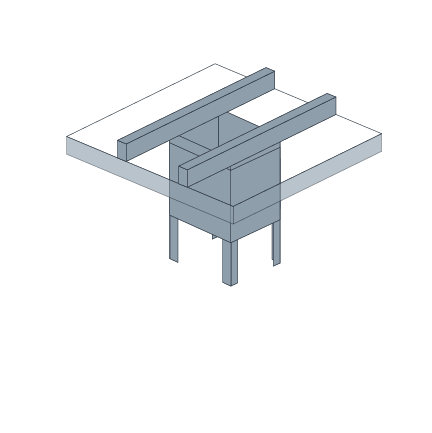
- Place brackets vertically inside the four corners of the ceiling bracket.
- Extend the brackets to the appropriate length. (The bottom of the hood should be 28”-36” above the cooktop).
- Screw all support brackets to the ceiling mounting bracket securing them tight.

STEP 4
Install Chimney
- Slide inner chimney sleeve over support brackets, covering the ceiling bracket.
- Screw into place at the top of ceiling bracket.
- Slide outer chimney sleeve over inner chimney sleeve.
- Adjust until the bottom chimney sleeve is a few inches above the bottom of the support brackets.
- You may want to use masking tape to help hold the chimney in place while you proceed to Step 5.
STEP 5
Install Chimney
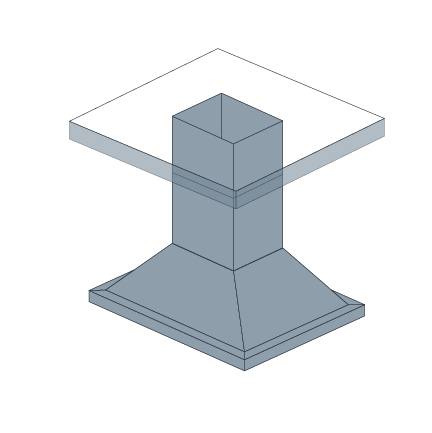
- If your hood comes with a transition ducting piece, secure it to the base of your hood before mounting.
- Place the base of the hood directly under the chimney.
- Screw hood to the support brackets on all four corners.
- Feed electrical and ducting work through chimney.
- Power your hood by hardwiring your hood to a power source or by plugging it in to a nearby electrical outlet if there happens to be one available.*
- Slide outer chimney sleeve down into place, meeting the top of the hood.
*Always consult an electrician before directly wiring a hood to a power source.
This concludes the installation of an island hood.
If you have any questions about the installation process please call Proline Customer Service at 877.901.5530 or visit prolinerangehoods.com.
Under Cabinet Hood
Under Cabinet Hood Preparation
WHAT YOU WILL NEED
- Power Drill
- Screwdrivers
- Drill Bits
- Tape Measure
- Masking Tape
- Pencil/Marker
- Metal or Aluminum HVAC Tape
- Level
- Wall Anchors*
- Scissors/Box Cutter
INSPECT RANGE HOOD
- Check the contents of your box. They should include:
- Range Hood
- Wall Mounting Bracket
- Hardware
- Transition Duct (Applies to Specific Models)
- Plug in and test controls, lights, and fan.
- Inspect for any damage caused during shipping.
- Report any damage to Proline Customer Service within 14 days of receipt of hood by calling 877.901.5530 or emailing support@prolinerangehoods.com
- Do not install if the hood is damaged or you are unsatisfied with it.
PREPARE DUCTWORK
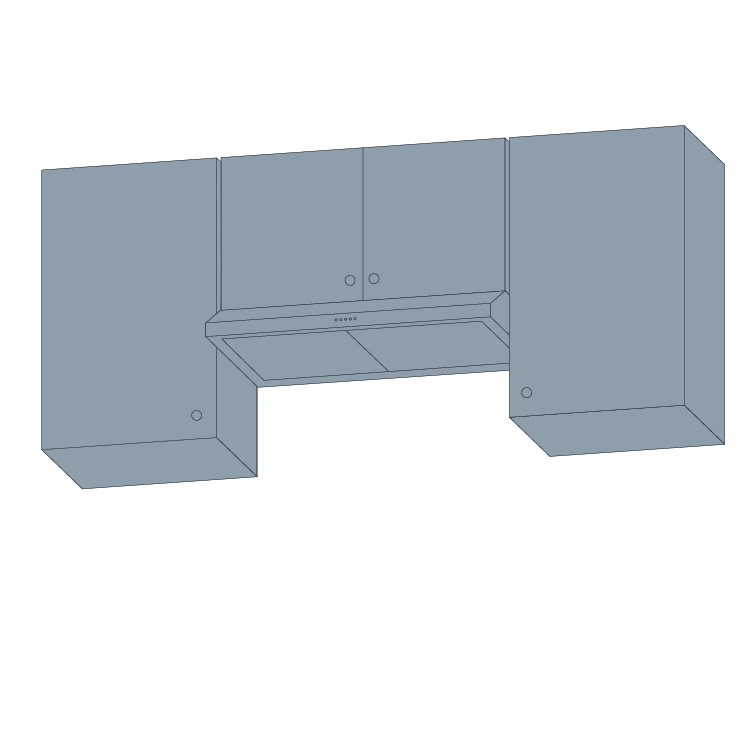
Plan where your ductwork will be located. Install the proper sized ductwork and exterior roof or wall cap, depending on where you will be venting your hood to the exterior. Ductwork should already be punched through the ceiling and above cabinet, or back wall and ready to hook up to the range hood before beginning installation. See venting requirements above.
*Range hood needs to be installed to secure studs or supports. Wall anchors can be used for additional support and will vary depending on wall material and the weight of the range hood being installed.
Wall Hood Installation
First draw these markings on the installation area wall
- Center line of installation area.
- Location of wall studs nearest to the center line. (One on each side)
STEP 1
Find location for mounting the range hood
- Trace the outline of your hood on a panel of its cardboard box.
- Find the mounting holes and center point of the hood (directly between the mounting holes) and mark them on the cardboard panel.
- Carefully cut out the cardboard outline.
- Tape the cardboard cutout panel to the wall leaving a small gap (roughly 1/8") below the bottom of the cabinet . Match the center point with the center line of the installation area.
- Poke holes through the mounting points on the cardboard marking the locations on the wall and remove the cardboard.
- Pre-drill the mounting holes where your marks are with the correct size drill bit.
- Screw in mounting screws, leaving roughly a 1/4” gap. This gap will be used to hang the hood in Step 2.

STEP 2
Hang & Secure the Range Hood and Connect:
- Carefully hang the hood on the mounting screws in place from
- Step 1. Tighten the mounting screws to secure the hood. The bottom of the hood should match up with the the horizontal line marked on the wall.
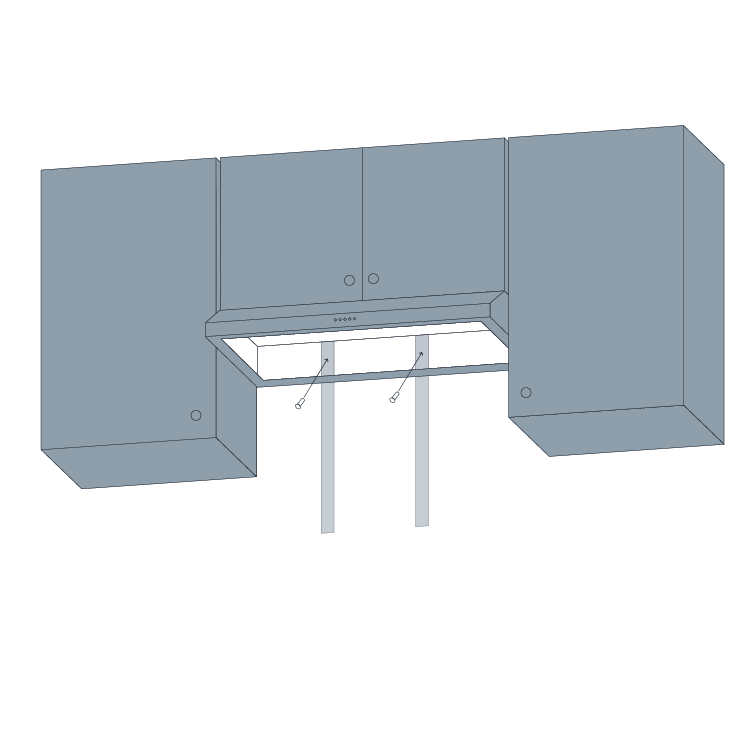
- Using the knockouts in the top of the hood, screw the top of the hood in to the bottom of the cabinet above
- Drill holes in the back of the hood lining up with the wall studs that have been previously marked,*(If the knockouts in the back of the hood do not match up).
- Secure the hood to the wall studs using the screws included in the hardware bag. Additionally, you may use the knockouts in the back of the hood to add more screws
- Attach the previously installed ductwork to the hood’s blowers, taping it in place using aluminum or HVAC tape.
- Power the hood by connecting the three pronged plug to a nearby electrical outlet or by hardwiring the hood to a power source**.
*Use an appropriate drill bit for the mounting screws included in the hardware bag.
**Always consult an electrician before directly wiring a hood to a power source.
This concludes the installation of an under cabinet hood.
If you have any questions about the installation process please call Proline Customer Service at 877.901.5530 or visit prolinerangehoods.com.
Recirculating Kit
Recirculating Kit Preparation
WHAT YOU WILL NEED
- Power Drill
 Wood Screws
 (6-8) Self-Tapping Metal Screws
- Tape Measure
- Double Sided Foam Tape
- Pencil
INSPECT RANGE HOOD
- Check the contents of your box. They should include:
- Recirculating Kit
- Charcoal Filter (Pre-installed)
- Inspect for any damage caused during shipping.
- Report any damage to Proline Customer Service within 14 days of receipt of hood by calling 877.901.5530 or emailing support@prolinerangehoods.com
- Do not install if the hood is damaged or you are unsatisfied with it.
OPTION 1
Wall Installation
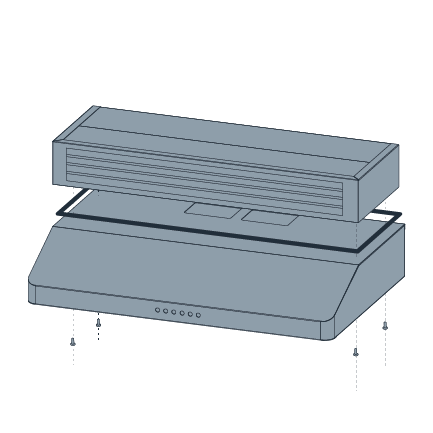
- Fasten the bottom of the recirculating kit (A) to the top of your range hood (B) by using 4-6 evenly spaced self-tapping screws (C).
- Join the top panel of the hood to the bottom flange of the recirculating kit by drilling and placing these screws from the under side of the hood.
- Optional: Apply strips of self-stick, double sided foam tape (D) around the bottom perimeter of the recirculating kit before joining with screws to provide more adhesion, minimize rattling, and dampen noise.
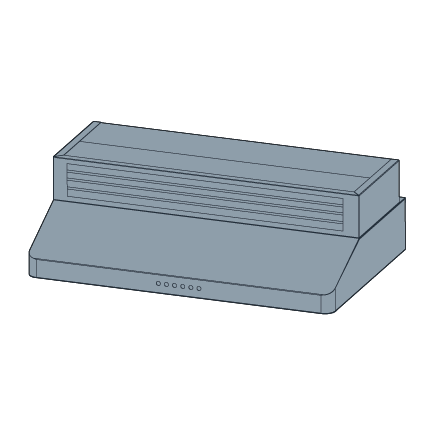
- Finish installation by mounting the hood and recirculating kit, through the back of the hood, to the desired location on the wall. Follow the detailed instructions in the previous section, Under Cabinet Hood Installation pg 20.
*Range hood needs to be installed in secure studs or supports. Wall anchors can be used for additional support and will vary depending on wall material and the weight of the range hood being installed.
OPTION 2
Under Cabinet Installation:
- Mount the Recirculating Kit (A) in its desired location to the bottom of your cabinet, using wood screws or other appropriate hardware.
- Fasten the top of your hood (B) to the bottom of the recirculating kit (A) by using 6-8 evenly spaced self-tapping screws (C).
- Join the top panel of the hood to the bottom flange of the recirculating kit by drilling and placing these screws from the under side of the hood.
- Optional: Apply strips of self-stick, double sided foam tape (D) around the bottom perimeter of the recirculating kit before joining with screws to provide more adhesion, minimize rattling, and dampen noise.
- Finish installation by mounting the hood and recirculating kit, through the back of the hood, to the desired location on the wall. Follow the detailed directions in the previous section, Under Cabinet Hood Installation pg 20.
This concludes the installation of the recirculating kit.
If you have any questions about the installation process please call Proline Customer Service at 877.901.5530 or visit prolinerangehoods.com.
Inline Blower
Inline Blower Preparation
WHAT YOU WILL NEED
- Power Drill
- Screwdrivers
- Drill Bits
- (2) Duct Transition Pieces**
- (12) Self-Tapping Metal Screws
- (2) Wood Screws or Lag Bolts*
- Aluminum HVAC Tape
- 2x4s or Appropriate Framing Material***
INSPECT INLINE BLOWER
- Check the contents of your box. They should include:
- Range Hood
- Ceiling Mounting Bracket
- Hardware Bag
- Chimney
- Support Brackets
- Transition Duct (Applies to Specific Models)
- Plug in and test controls, lights, and fan.
- Inspect for any damage caused during shipping.
- Report any damage to Proline Customer Service within 14 days of receipt of hood by calling 877.901.5530 or emailing support@prolinerangehoods.com
- Do not install if the hood is damaged or you are unsatisfied with it.
FIND BLOWER MOUNTING LOCATION
Find an area along the desired path of your duct work where you have enough room to mount the inline blower and is sturdy enough to support the weight of your blower. This should be either a solid wall, a stud, part of your home’s structure, or a framed area within your attic that is structurally sound enough to mount the blower to. Both points on the mounting bracket should be mounted to a stud, rafter, or joist.
PREPARE DUCTWORK
After finding your inline blower’s mounting location, plan where your duct work path will run. This includes where it will leave your range hood, run through the inline blower, and exit your home. Install the proper sized duct work along your planned route and the exterior roof or wall cap, depending on where you will be venting your hood to the exterior. Duct work should already be run through the ceiling or back wall behind your range hood and ready to hook up to the range hood and inline blower before beginning installation on them. See venting requirements above.
* Use 1/4” Diameter Lag Bolts or #14 Wood Screws to fix the blower mount bracket to the wall. Length will vary depending on material you are fastening to.
** Duct transitions may be required to step down the intake and exhaust openings of the blower to match the size of ducting you are using. Transition pieces can be purchased at any HVAC or home improvement store.
*** 2x4s and other additional framing material may be required if installing extra supports.
STEP 1
Insert Mounting Screws to the Wall:
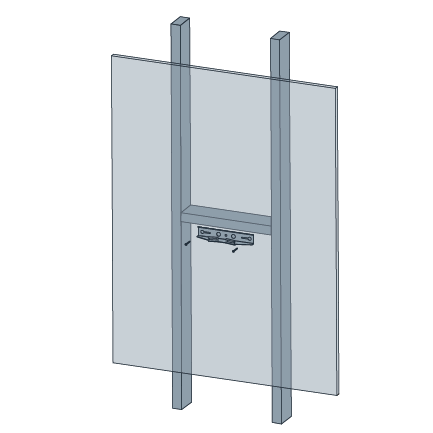
- After finding a location where you are going to mount your inline blower, find the specific location where your inline blower mounting bracket will go. Remember, the mounting bracket needs to be mounted to solid studs or rafters in the framing of your home or attic.
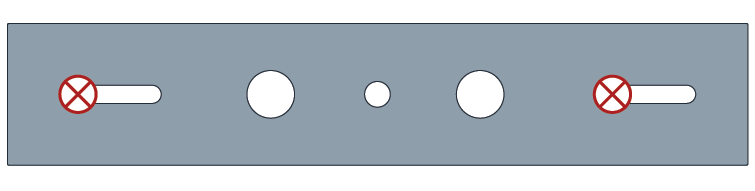
- Trace the location of the large circle in the two channels of the flat side of the mounting bracket on the wall. This is where the bracket will be mounted to the screws. See illustration for Step 1 (locations marked in red.)
- Using the appropriate drill bit for the hardware you are using, pre-drill and insert the screws in your marked locations. Leave the screw head a 1/4” out from the wall for now. This gap will be used to hang the blower and bracket while mounting them to the wall in Step 3.
STEP 2
Install the Mounting Bracket to the Blower:
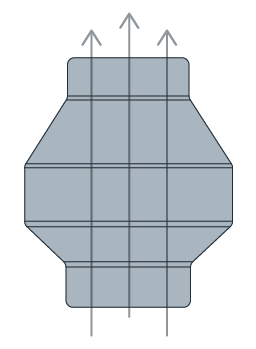
- Line up the two holes on the blower to the two curved channels on the mounting bracket that are facing away from the wall. Orient the blower so that the longer tapered side is facing up and toward the direction that the air will be forced. See Illustration for Step 2.
- Fasten the blower to the mounting bracket using the machine screws provided with the blower.

STEP 3
Mount the Blower + Bracket to the Wall:
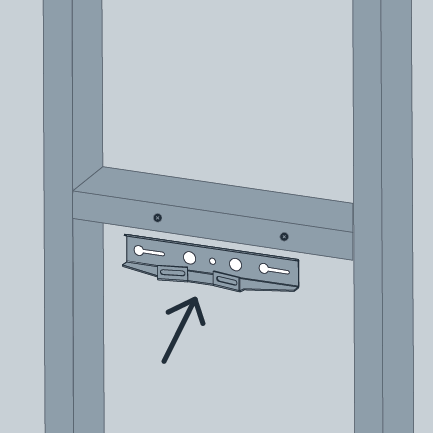
- Once the mounting bracket is securely fastened to the blower, hang the blower by its bracket on the screws that have been installed in the mounting location from Step 1. See Illustration for Step 3 (Blower omitted for clarity.)
- Slide the blower and bracket on its channel to the left and finish fastening the two screws to securely fix the blower to its installation location.
STEP 4
Attach Duct Work to the Blower:
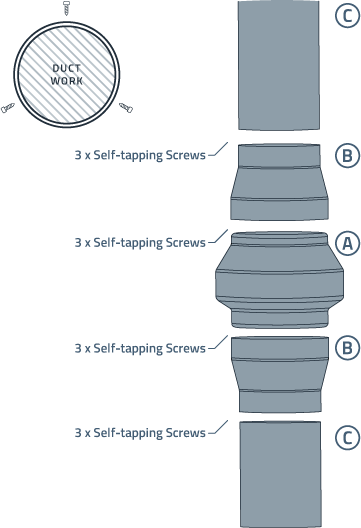
- After installing the blower to the bracket, it is now time to install the previously installed duct work to the blower. This may require transition pieces (B) if your inline blower (A) does not match the diameter size of ducting (C) you are using. See diagrams for Step 3.
- If your duct work set up does not require transition pieces proceed to the next bullet point. Place the transition pieces (B) on both ends of the blower (A). Using your drill, screw three self-Vtapping screws, spaced evenly around the circumference of the transitions, through the transitions into the blower. Generously wrap the seams of the connections with Aluminum HVAC tape to seal any airflow that may escape.
- Place the duct work (C) on both ends of the blower (A), or pre-transitioned blower. Using your drill, screw three self-tapping screws, spaced evenly around the circumference of the ducting, through the ducting and in to the blower or transition pieces. Generously wrap the seams of the connections with aluminum HVAC tape to seal any airflow that may escape.
STEP 5
Run Power to the Blower:
- Once the blower is installed, the final step is connecting the inline blower to your range hood and getting power to them both.
- This process will depend on where you live and what your home’s electrical code entails. Always consult a professional electrician before powering your inline blower and range hood.
- The inline blower comes with a 110v plug which should be plugged in to the corresponding outlet in the back of your range hood. Run the cord down the outside of your ductwork and to the back of your range hood to be plugged in.
*Always consult an electrician before directly wiring a hood to a power source.
This concludes the installation of an inline blower.
If you have any questions about the installation process please call Proline Customer Service at 877.901.5530 or visit prolinerangehoods.com.
PRO-V
PRO-V Installation
OPTION 1
LOCAL BLOWER INSTALLATION:
- Mount the local blower and blower plate to the inside top of your hood using the hardware provided. (If the blower is not previously installed.)
- Connect the ductwork using the supplied transition and damper with the hardware provided.
- Plug the local blower power cord into the plug-in located on the back of the control plate inside the hood.
- Using the previous sections in this guide, complete the installation of your Pro-V according to which type of hood it is: Wall or Island.
OPTION 2
Install Ceiling Chimney Bracket
- Refer to the previous section on page 23, Inline Blower Installation, to complete the installation of your Inline blower.
- Plug the Inline blower in to the plug-in located on the back of the control plate inside the hood.
- Using the previous sections in this guide, complete the installation of the PRO-V according to which type of hood it is: Wall or Island.
OPTION 3
Hang Range hood and Connect:
- Install your external or rooftop blower according to the manufacturer’s specifications.
- Connect the ductwork from the External Blower to the Pro-V hood.
- Using the previous sections in this guide, complete the installation of the PRO-V according to which type of hood it is: Wall or Island.



